
Let’s Talk Policy: Opioids
We see it on the streets everyday -- people in crisis publicly using or under the influence of illicit drugs. We feel many emotions, typically ranging from compassion to feeling uncomfortable and not knowing how to respond. We may just walk by, or we may call 911 for a Behavioral Crisis Team, but often that’s it. Opiate Use Disorder (OUD) is devastating not just to the afflicted, but also because it creates collateral damage to everyone in that person's orbit and to society at large.
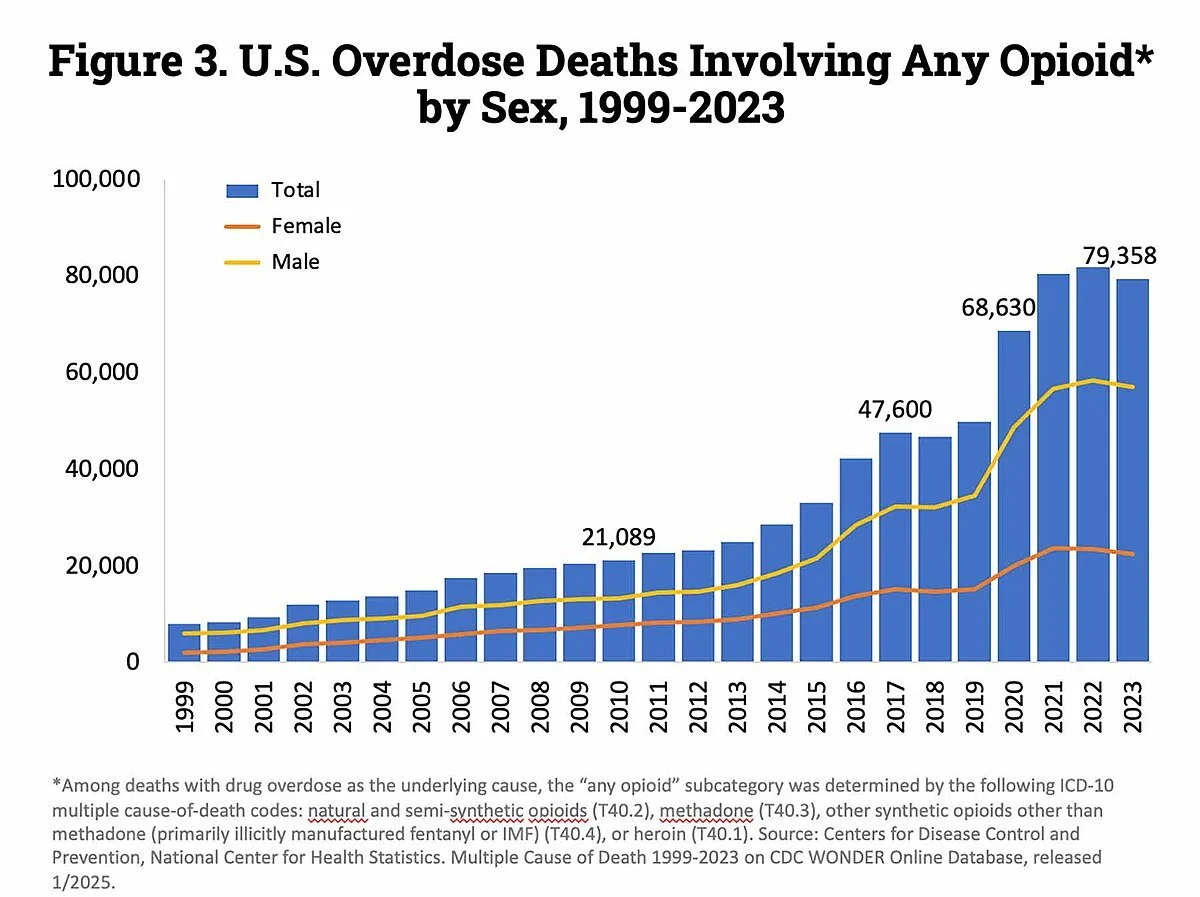
In Minnesota we have seen a reduction of overdose deaths in recent years, and more people than ever are using medication to treat OUD. This is largely due to a greater emphasis on reducing the prescription and consumption of opiates, along with harm reduction measures like Narcan being more widely available. Yet for Americans between 18 and 44, drug overdose remains the leading cause of death.
While having housing, employment, and counseling is critical for someone to succeed at being sober and independent, the “evidence based treatment” supported in medical literature for OUD is treatment with suboxone / buprenorphine (sometimes referred to as “MOUD,” medications for opiate use disorder, or “MAT,” medication assisted therapy).
The main idea with buprenorphine is that it binds to an opiate receptor, activating it just enough to stave off withdrawal and cravings. It also binds so tightly that it blocks other opiates from causing intoxication or overdose. Put simply, it threads the needle. If you're not trying to stay out of withdrawal all day and have your cravings for opiates addressed, then you have room to pursue a normal life. This is how it works.
In speaking with ER doc and Bryn Mawr resident Dr. Carter Casmaer, he wants the public to understand that our city's emergency departments (U of M, HCMC and Abbott) already have a no-barrier treatment option for patients struggling with addiction. No- or low-cost medication is key:
“If one was to present to the Emergency Department (ED) at any of these hospitals in opiate withdrawal you would be given buprenorphine to treat your withdrawal symptoms acutely (and it works very quickly) and then if a patient wishes they would be prescribed buprenorphine (often at no cost to them if they cannot pay) and given their prescription while in the ED. Afterwards, their information would be given to either a social worker who works in the ED or their equivalent and they would be scheduled a time in either a primary care clinic or the addiction medicine clinic of that institution to continue their treatment. Simple as that.”
Many of the city and county interventions targeting opiate use disorder (OUD) funnel money to organizations working in various facets of addiction treatment, such as harm reduction measures, counseling, housing support or job training. The City is expected to receive approximately $18M in opioid settlement funds over the next 18 years (2022-2038) from national settlements reached with opioid distributors and manufacturers. Minneapolis awarded its first round of opioid settlement money to community-based organizations in 2024. Then in 2025, opioid funding was also used to launch the Minneapolis Mobile Medical Unit, which brings treatment and resources to underserved communities.
Hennepin County has the deepest pockets for funding health and human services, and I am hopeful we can keep improving information sharing and coordination between the city and county. I believe there is an opportunity for the city and county to work jointly to direct people with OUD to hospitals directly for treatment and to promote awareness of no-barrier medical treatment options, as described by both MinnPost and by M Health/Fairview.
The highest success rate for addiction treatment is when an individual chooses treatment for themselves, in whatever form. However, when an individual’s illegal actions begin to affect local businesses and residents, we need to consider enforcement strategies of all kinds, beyond just criminal consequences. Last week while door knocking, a Ward 7 resident invited me in to see the view from her balcony. It was a lovely second floor view with some potted flowers overlooking the Loring Greenway. She told me, “I’m not sure I’m going to stay in Minneapolis. When I come home from work on a nice summer evening, I can’t use my balcony because I overlook this bench where people sit and use drugs.”
The opioid crisis is a pressing public health issue, but as we continue to emerge from the pandemic we have seen improvements. We should expect to see this trend continue to improve so long as we maintain low/no-barrier pathways to obtaining treatment and work to promote awareness of this among the larger community.
If elected your council member, I am committed to doing whatever I can, within our realm of influence, to help residents suffering from OUD and those impacted. We need to love people enough, highlight the many pathways to help, and love our city enough to have boundaries while we work towards lasting solutions.